ServicesCalcium Removal and Tile Cleaning
Calcium Removal and Tile Cleaning in Apache Junction
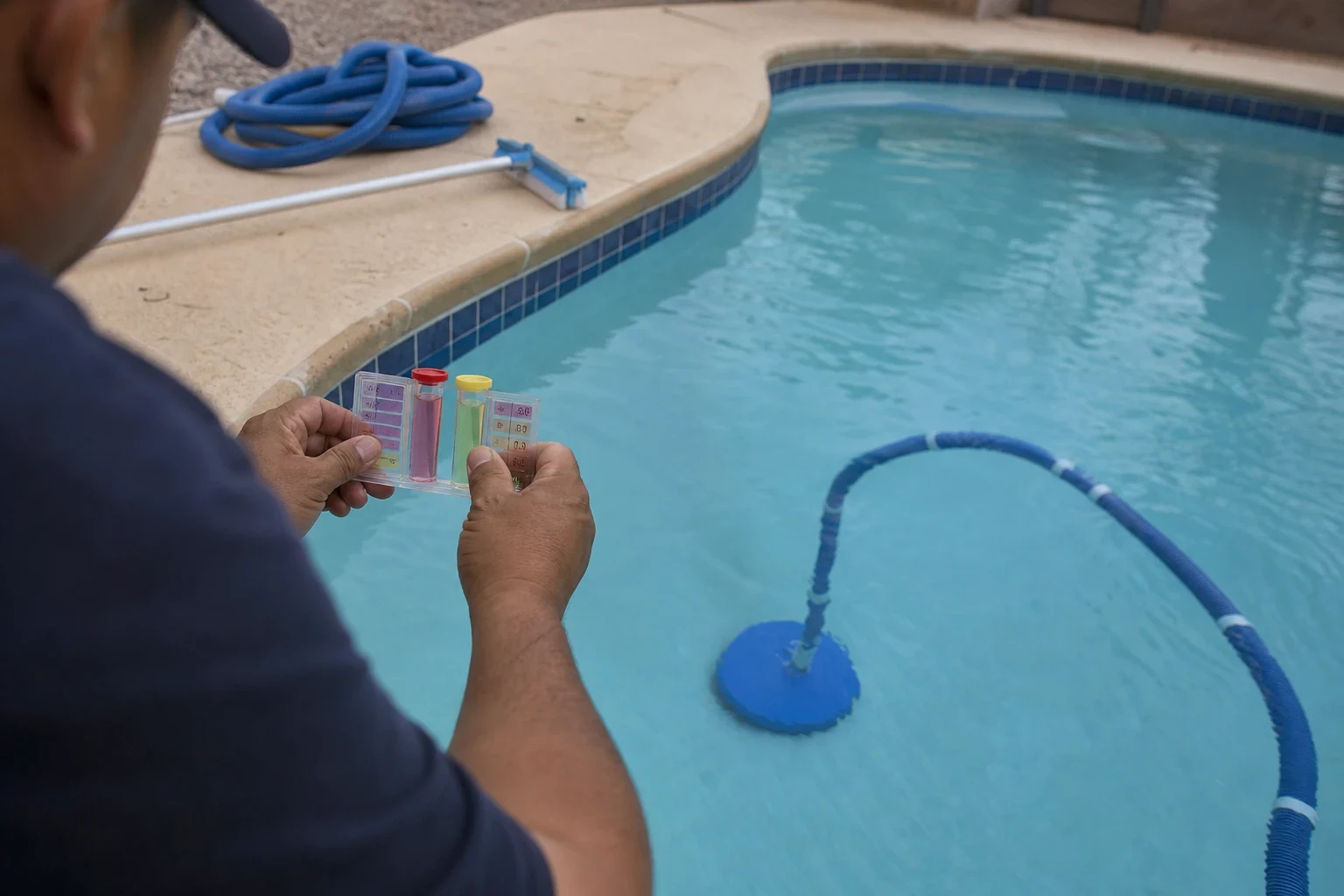
That white or gray crust along your waterline is calcium scale, and a pool brush will not lift it. We remove it carefully from tile and stone, keep your decking and plants protected while we work, and leave the water balanced so the line stays clean longer.
What calcium removal does for your pool
Hard water leaves minerals behind as it evaporates. Through a long desert summer, a pool loses water fast and gets topped off often, so those minerals collect in a band at the waterline. Over months the band thickens, turns rough and gray, and starts to stain the grout around each tile.
We treat calcium removal and tile cleaning as its own job, separate from routine brushing. It is the right call when deposits feel sharp to the touch, when regular cleaning no longer moves them, or when you simply want the tile to look the way it did when it was set. If scale covers the plaster across the whole pool, an acid wash is usually the better fit, and we will say so plainly.
We are ROC licensed, and we look at the material before we choose a method. Glazed ceramic, glass tile and natural stone each react differently, and the finish is what you will see every day.
What the work includes
- Testing the scale first
- We work a small, out-of-the-way spot to tell calcium carbonate from calcium silicate. Carbonate is white and flaky and comes off readily. Silicate is harder and grayer and takes more time, which is why we check before quoting.
- Hand removal on tile
- Pumice and tile stones for glazed ceramic, softer pads for glass tile, which scratches easily. We work the full line evenly so no patchy band is left behind.
- Descaler where it helps
- On stubborn deposits we apply a pool-safe descaling product in short sections, let it work and rinse it promptly so it never sits on plaster or stone.
- Coping, stone and water features
- Travertine, flagstone, spillways and rock features get methods suited to porous stone, which can etch if the wrong product touches it.
- Balancing the water afterward
- We test calcium hardness, pH and total alkalinity and adjust them, so the water is less inclined to lay new scale on clean tile.
- Cleanup and a walkthrough
- Scale debris is collected, the deck is rinsed, and we show you the finished line along with anything we noticed, such as a loose tile or cracked grout.
Signs your tile needs more than brushing
A white ring that stays put
If the band at the waterline is still there after a firm brushing, it has hardened into scale.
Gray, gritty crust
A darker, sandpaper-like deposit is often calcium silicate. It only gets harder to remove the longer it sits.
White streaks on water features
Spillways, sheer descents and rock waterfalls build scale quickly because water spreads thin and evaporates on them.
Glass tile that looks cloudy
Glass tile should catch the light. A dull film usually means a fine mineral layer has settled over it.
Chalky or crumbling grout
Scale working into grout lines can loosen them over time, and that is worth catching early.
How the day goes
- 1
A free quote at your pool
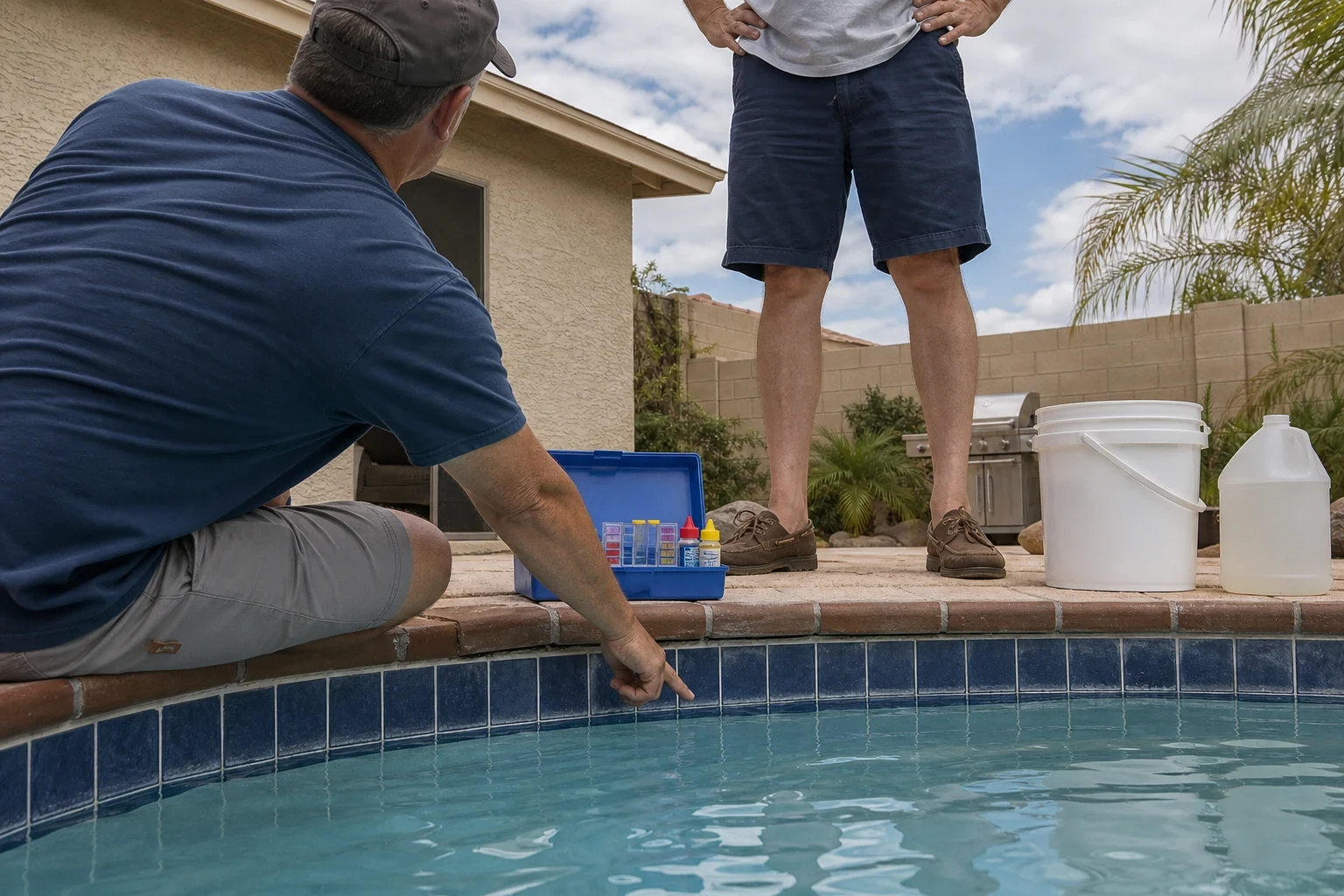
After your call, we come out, look at the scale and the tile, and give you a free quote that explains the method we plan to use and roughly how long it will take.
- 2
Setting up with care
We let the household know when we arrive and which areas we will be using. Decking near the work gets covered, hoses are routed along edges, and products stay well away from plants and gravel beds.
- 3
Lowering the water
We pump the level down just below the scale line so the whole band is exposed. The water goes where local rules allow, never across your landscaping.
- 4
Removing the scale
We work section by section, rinsing as we go and checking the finish under good light so the line comes out even.
- 5
Refill, balance and walkthrough
We refill to the normal level, balance the water and walk the pool with you before we pack up and rinse the deck.
What moves the price
No two scale lines are the same, so we quote after seeing yours. The quote is free and spells out the scope, so you know what is planned before any work begins.
- Type and thickness of scale
- Light carbonate comes off far faster than thick silicate. Years of buildup takes more passes.
- Length of the waterline
- A larger pool, an attached spa or several water features simply means more tile and stone to cover.
- Tile and stone material
- Glass tile and porous stone call for slower, gentler methods than glazed ceramic.
- Water level and refill
- Lowering the pool and refilling it adds time and some water use, especially when the scale sits low on the tile.
- Grout and tile condition
- If cleaning reveals loose tiles or failing grout, we price that repair separately. All repairs are completed in-house, not subcontracted.
Calcium and tile questions
Something not covered here? (480) 520-1410
Will removing calcium scratch my tile?
Not when the method matches the material. We test a small spot first and use softer tools on glass tile and stone. Glazed ceramic tolerates pumice well when it is kept wet.
Do you need to drain the whole pool?
No. We lower the water only a few inches, enough to expose the scale band. If the plaster itself is heavily scaled, we may suggest our pool drain and refill or acid washes service instead, and explain why.
How long does the job take?
Most pools take part of a day, depending on how thick the scale is and how much tile and stone there is. Silicate and stone features take longer. We give you a time estimate with your quote.
Why does the scale come back?
Fill water here is hard, and heat drives steady evaporation, so minerals keep concentrating. Keeping calcium hardness, pH and alkalinity in balance slows it a great deal, and so does brushing the waterline regularly.
Can weekly service keep the tile clean afterward?
It helps considerably. Our weekly pool cleaning includes brushing the tile line and balancing the water, with chemicals included in the monthly price. Regular care will not stop scale entirely, but it stretches the time between deep cleanings.
Let's take a look at your waterline
Tell us what you are seeing on your tile and we will come out, test the scale and walk you through the plan. Your decking and plants are treated with care from setup to cleanup.